
What Cape Town’s Peak Summer Season Actually Does to Bulk Food Orders
Between November and February, Cape Town transforms. Hotels along the Atlantic Seaboard fill to capacity, the V&A Waterfront runs at full tilt, and restaurants across the Winelands corridor see covers double or triple overnight. For operations that rely on bulk food distribution, this period is either a well-managed opportunity or a supply chain nightmare — and the difference almost always comes down to preparation made months in advance.
The pressure hits hardest in the areas closest to the tourist corridors. Businesses near Kenilworth, Constantia, and along the busy Wetton Road precinct often find that their usual weekly order quantities become inadequate within days of the December rush starting. Caterers working the southern suburbs, hospitality venues near the N2 corridor, and corporate canteens in the Claremont business district all face the same squeeze: demand spikes, but supplier capacity doesn’t automatically scale with it.
What most buyers discover too late is that wholesale food suppliers south africa-wide face a compounding problem during this window. Warehouses in the greater Cape Town distribution belt start allocating stock by priority accounts in October. If you haven’t had a formal conversation with your distributor about projected volumes before then, you’re likely to find yourself fifth in the queue when dry goods or ambient stock runs low.
Why Regular Order Patterns Break Down in Summer
A common assumption is that you can simply increase your standing order when demand picks up. In practice, this rarely works smoothly. Bulk food distributors south africa operations plan their vehicle routes, warehouse pick-and-pack schedules, and refrigerated transport allocations weeks ahead. A sudden volume spike from a buyer who hasn’t flagged it in advance creates ripple effects: delayed dispatch, substituted products, or split deliveries that arrive on different days.
The businesses that handle this best typically do two things. First, they sit down with their distributor in September or early October and work through projected monthly volumes based on the previous year’s trading data. Second, they agree on a buffer stock arrangement — keeping a portion of high-turnover dry goods on-site to cover any gap between the scheduled delivery and actual demand. It’s a straightforward approach, but it requires the kind of relationship where both sides communicate frankly rather than just processing orders transactionally. Good food distributors in this market will actively prompt you for this conversation; if yours doesn’t, it’s worth asking.
Route Realities: How Cape Town’s Road Corridors Affect Bulk Delivery Reliability

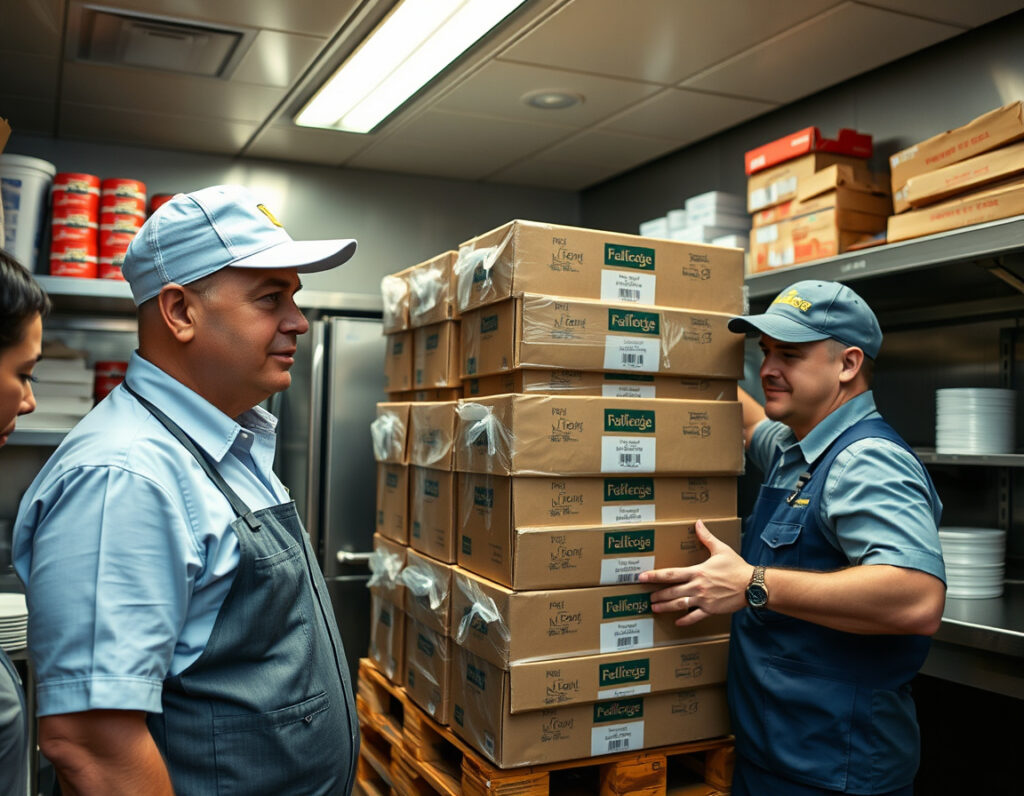
Geography matters more in bulk food logistics than most buyers realise. Cape Town’s road network concentrates a large share of commercial freight movement along a handful of key arteries, and understanding how these corridors work helps you set realistic expectations with your supplier.
The N1 corridor handles the bulk of distribution traffic moving between the northern logistics hubs and the southern suburbs. Delays along this route, particularly around the Bellville interchange and the approach to the R300 junction, are common during school-term morning peaks and dramatically worse during the December tourist influx when private vehicle traffic swells significantly. Buyers in Constantia, Wynberg, and the Kenilworth corridor should factor in the likelihood of afternoon delivery windows rather than first-run morning slots during peak periods.
The N2 is the primary route servicing the southern Cape and the airport industrial zone, making it critical for any buyer receiving product from food distributors south africa who consolidate loads coming from Johannesburg or Durban. Congestion near the Settlers Way interchange and the Langa turnoff can add hours to what looks like a straightforward cross-town delivery. If you rely on goods that originate outside Cape Town, it’s worth asking your distributor explicitly which route their drivers use and whether alternative routing is an option when the N2 is compromised.
Planning Delivery Windows Around Local Traffic Patterns
One practical move that many Cape Town food businesses overlook is requesting staggered or off-peak delivery windows during the November-to-February period. Catering food suppliers south africa who operate in this market will generally accommodate this if asked, because it also benefits their own route efficiency. A delivery slotted for 6:30 AM along the Wetton Road precinct or the Old Kenilworth Road corridor is far more reliable than one scheduled for 8:30 AM when local traffic peaks.
This kind of scheduling conversation is also where your relationship with your distributor either proves its value or exposes its weaknesses. A distributor who can give you a real-time ETA update, accommodate a window shift with reasonable notice, and flag when a route disruption is likely to affect your slot is worth considerably more operationally than one who simply confirms an order and leaves logistics entirely to chance.
For more on what makes these supplier relationships work over time, understanding the foundations of a long-term food distribution partnership is a useful starting point. The short version: communication frequency and mutual transparency about capacity constraints are the two factors that separate functional relationships from ones that crack under pressure.
Stock Security Strategies for High-Volume Summer Operations
Stock security during peak season is not just about ordering more — it’s about ordering smarter. Buyers who manage this well in Cape Town’s food service sector tend to use a combination of forward ordering, safety stock targets, and product substitution agreements with their distributor.
Forward ordering means committing to volumes a week or two ahead of your normal lead time, often with the understanding that final quantities can be adjusted within an agreed tolerance. This gives your wholesale food suppliers enough runway to allocate stock against your account before competing demand absorbs available inventory. It’s a modest ask that most established distributors will accommodate, particularly for accounts with a consistent trading history.
Safety stock targets are equally straightforward in concept. For your highest-turnover dry goods and ambient products, identify the minimum quantity you need on hand to cover a two-day gap in deliveries. Then treat that quantity as untouchable stock, restocking it before you dip into it rather than after. This approach, combined with working with dedicated bulk food suppliers who understand professional kitchen requirements, gives you meaningful protection against the supply gaps that catch unprepared operations out every January.
Product substitution agreements are less commonly used but genuinely valuable. Agreeing in advance with your distributor on acceptable substitute products for your top ten SKUs means that if a specific item is temporarily out of allocation, you get a functional alternative rather than a line item gap on your delivery note. For many kitchens in the Constantia Valley or the Claremont catering corridor, a pre-agreed substitution keeps service running when an unplanned gap would otherwise cause real operational disruption.
How Technology Is Changing Peak-Season Planning
The logistics side of bulk food distribution has shifted considerably in recent years. Route optimisation software, live inventory portals, and automated reorder triggers are now accessible to mid-size distributors operating in Cape Town, not just the large national networks. For buyers, this means that asking your distributor whether they have a buyer-facing portal or live stock visibility tool is a reasonable question, not an unreasonable demand.
If your current supplier can show you real-time stock levels against your allocated product range, you can make smarter decisions about when to forward-order and when your safety stock buffer is sufficient. For a more detailed look at how these tools are being applied by food distributors across the industry, this breakdown of technology-driven improvements in food distribution efficiency covers the practical options available in 2025. The Cape Town market is increasingly adopting these tools, and buyers who ask for them tend to get better service outcomes than those who don’t.
The South African Department of Agriculture, Land Reform and Rural Development also publishes periodic supply chain guidance that affects how distributors manage seasonal stock allocation nationally, which is worth understanding if you’re planning for the full summer cycle rather than just a single peak week.
Frequently Asked Questions
How far in advance should I contact my bulk food distributor before Cape Town’s summer peak season?
September is the practical window for most operations. By early October, warehouse allocation processes for the December-January period are already underway at the major distribution centres serving the Cape Town area. If you can share projected volume figures and flag any new product requirements by mid-September, your distributor has enough lead time to plan your account into their peak-season capacity. Leaving this conversation until November almost always results in some degree of stock constraint or delivery window compression.
What should I include in a peak-season stock planning conversation with my food distributor?
Cover four things: your projected weekly volumes by product category, your preferred delivery windows and whether these need to shift during peak, your top ten highest-risk SKUs where stockouts would cause the most operational disruption, and your tolerance for product substitutions if specific items go out of allocation. Distributors who operate across the Cape Town corridor deal with these conversations regularly and will generally respond well to a buyer who comes prepared with data rather than a vague request for “more stock”.
Does the N1 or N2 traffic situation affect delivery lead times from my distributor during peak season?
Yes, and more than most buyers account for. Both corridors experience measurable congestion increases during the November-to-February tourist season, particularly on weekday mornings and on weekends when leisure traffic combines with commercial freight. The practical impact is that delivery windows can extend by one to three hours compared to off-peak months. Requesting early-morning delivery slots, agreeing on alternative routing options with your driver or dispatcher, and building a slightly larger safety stock buffer during this period all help absorb the variability without disrupting your kitchen or service operation.
Managing bulk food supply through Cape Town’s peak summer season takes more active planning than most operations build into their annual calendar. On the Run Marketing Cape Town works with businesses across this region to ensure the right supplier connections, volume agreements, and logistical frameworks are in place well before demand spikes hit. Whether you’re running a catering operation near Constantia, a corporate canteen in Claremont, or a hospitality venue closer to the Waterfront, getting your supply chain positioned correctly before November makes the difference between a profitable summer and one spent chasing stock. Reach out to On the Run Marketing Cape Town via the contact page or explore the full range of food distribution services available in Cape Town to start the conversation. You can also review food safety and supply standards guidance from Food Safety South Africa to align your procurement planning with current industry requirements.