
What Cape Town Importers and Exporters Actually Need From a Food Distributor
Sourcing food products across borders is a different challenge entirely from domestic supply. Businesses operating along the Cape Town food import and export corridor face a layer of complexity that a standard supermarket supplier simply cannot address. Customs clearance timelines, country-of-origin labelling requirements, permit conditions under the Foodstuffs, Cosmetics and Disinfectants Act, and variable port lead times at the Port of Cape Town all sit between your order and your customer’s plate.
The Haasendal and Kuils River commercial belt, sitting off the R300 freeway east of Cape Town, is home to a growing cluster of food processing and import businesses that move product in and out of the Western Cape regularly. Companies in this corridor need a distribution partner that understands cross-border documentation, not just a warehouse with a truck fleet.
Good food distributors in this space do more than deliver boxes. They hold the right permits, can advise on cold chain requirements for regulated product categories, and maintain relationships with clearing agents. That kind of operational depth matters when a delayed shipment means spoiled stock or a broken supply commitment to a hotel kitchen in the Winelands.
If you are evaluating your current setup, the Food Distributors Cape Town service page gives a clear picture of what structured distribution looks like for Western Cape buyers and importers.
Cross-Border Documentation: Where Most Small Importers Get Stuck
The gap between placing an international order and getting product onto a local shelf is filled with paperwork. Health certificates, phytosanitary certificates for plant-based products, import permits issued by DALRRD, and conformity to SANS food labelling standards are all non-negotiable. Small food businesses importing for the first time often underestimate this stage and end up with consignments sitting at Customs while their supplier’s shelf-life clock ticks down.
A distribution partner with import experience already has these workflows mapped. They know which product categories trigger inspection at the Port of Cape Town, what documentation a clearing agent needs upfront, and how to plan inbound lead times around Customs processing windows. That knowledge saves money, and more importantly, it protects the product.
The factors that make a food distribution partnership work long-term almost always come down to this kind of operational alignment, not just price per unit.
Export-Ready Distribution: Getting Western Cape Product Into International Markets
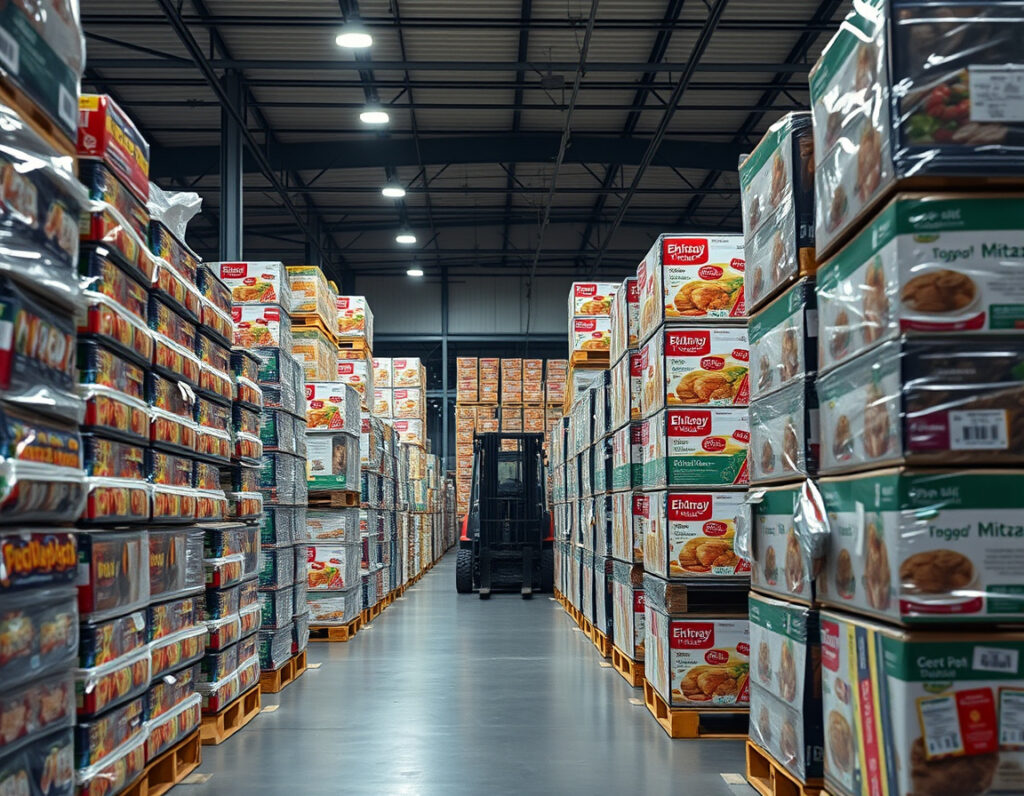
Cape Town sits at the edge of one of South Africa’s most productive agricultural regions. The Boland corridor, stretching from Paarl through Franschhoek and toward the Hex River Valley, produces stone fruit, wine, table grapes, and processed food products that move into European, Middle Eastern, and Asian markets every season. Getting that product from farm gate to export container requires a distribution layer that most small producers do not have in-house.
Wholesale food suppliers south africa who work the export side of the business understand the additional compliance stack: PPECB inspections for fresh produce, HACCP certification requirements for processed products, EUR.1 movement certificates for EU-bound shipments, and fumigation certificates for certain dry goods categories. These are not bureaucratic extras. They are gate-keepers to market access.
On the Run Marketing Cape Town works with businesses navigating exactly this kind of supply chain complexity, connecting buyers and suppliers who need documented, compliant distribution networks rather than ad hoc arrangements.
For businesses that also move product in bulk, understanding the full picture of dedicated bulk food suppliers and distributors for professional kitchens helps clarify where volume pricing and consolidated freight start to make financial sense.
Kuils River and Bellville South as Distribution Staging Points
The industrial zones around Kuils River and Bellville South, accessible off Voortrekker Road and the N1, are increasingly used as staging areas for food products moving between agricultural supply points and the Port of Cape Town. The proximity to the R300 interchange makes these areas practical for consolidating loads before export, or for breaking down imported containers for local secondary distribution.
Bulk food distributors south africa operating in this corridor benefit from the area’s road connectivity: the N2 provides direct access south toward the port, while the N1 links toward Paarl and the Boland producing regions. For import-focused businesses, having a distribution base in this part of the northern suburbs cuts transit time and reduces the risk of temperature excursions for cold chain product.
The hospitality food distribution context for Bellville South illustrates how local commercial kitchens are already plugged into these same supply networks, which matters if your imported product targets food service rather than retail.
Halaal Certification and Cape Town’s Import Market
Cape Town has one of South Africa’s largest Muslim consumer populations, concentrated across areas like Mitchells Plain, Athlone, and Bo-Kaap. For imported food products targeting these communities, Halaal certification from a recognised South African authority is not optional. The Muslim Judicial Council (MJC) and the National Independent Halaal Trust (NIHT) are the two bodies most widely recognised locally, and importers need to establish which certification their target retail or food service buyers will accept before the product lands.
This matters at the distribution level too. A food distributor south africa moving Halaal-certified imported products needs to maintain segregation protocols in their warehousing and transport to avoid cross-contamination with non-Halaal lines. That requires documented procedures, trained staff, and ideally, a facility that has been assessed by a certifying body.
Buyers sourcing for catering operations or institutional kitchens should check the catering food supplies overview to understand what documentation a well-structured distributor can provide alongside product delivery. According to the Department of Agriculture, Land Reform and Rural Development, imported food products must comply with all applicable South African food safety and labelling regulations before entering the local supply chain, regardless of their certification status in the country of origin.
For a broader look at how product demand differs between Western Cape and Gauteng markets, the analysis of which products have the highest demand in Cape Town vs Johannesburg is worth reading before finalising your import category selection.
Frequently Asked Questions
What permits does a Cape Town business need to import packaged food products from outside South Africa?
Most imported packaged food products require an import permit issued by the Directorate: Plant Health or the Directorate: Animal Health under DALRRD, depending on the product category. All products must comply with the Foodstuffs, Cosmetics and Disinfectants Act and meet SANS labelling standards before they can be sold locally. A clearing agent familiar with food import categories can advise on the specific permit requirements for your product, and a good distribution partner will already have working relationships with agents who handle these categories regularly.
Can a food distributor help with export documentation for South African products going overseas?
Yes, though the level of support varies between distributors. For fresh produce exports, the Perishable Products Export Control Board (PPECB) inspection and certification is mandatory, and experienced food distributors south africa who work the export side will have this process built into their workflow. For processed food products, exporters may need HACCP certification, health certificates, and market-specific documents like EUR.1 certificates for EU destinations. A distributor that regularly handles export logistics will either manage these directly or have trusted agents who do.
How does minimum order quantity work for imported products moving through a wholesale food distributor?
This depends on the distributor’s warehouse model and the product category. For imported dry goods, minimum orders are often set at full or half pallet quantities to keep per-unit freight costs manageable. For chilled or frozen imported products, minimums tend to be higher because of cold chain operating costs. The best approach is to discuss your typical order volumes upfront during the account setup stage. The wholesale food distributor overview covers how these account structures typically work for buyers sourcing in volume.
Whether you are bringing product into Cape Town through the Port or moving Western Cape food into export markets, the distribution layer in the middle determines whether your supply chain holds or breaks. On the Run Marketing Cape Town connects food businesses with distribution networks that are built for this kind of cross-border complexity, not just local delivery runs. If you are ready to structure a more reliable supply arrangement, the contact page is the right place to start the conversation. You can also visit the About page to understand the broader network before reaching out. For an industry-wide reference point on food safety requirements for imported products, the WHO food safety guidelines provide a useful baseline for understanding international compliance expectations.